
Sound Barrier: How Temporary Setups Differ Across Construction Phases
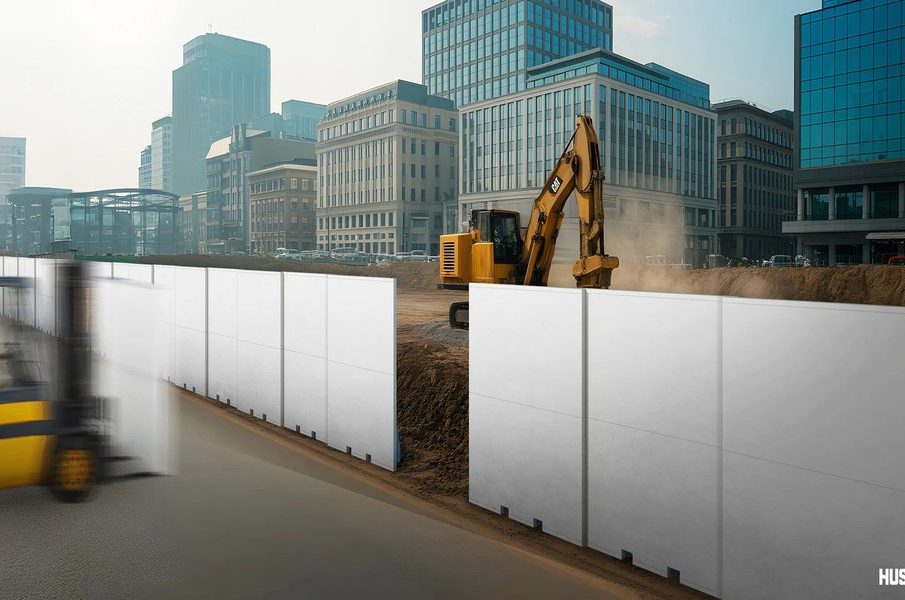
Construction sites don’t stay still. They evolve-sometimes slowly, sometimes in sudden bursts of activity. And as the site changes, the way noise is managed changes too.
That’s why a sound barrier system for construction isn’t really a “set it and forget it” system. It’s more like something that gets reshaped and reworked as the project moves from one stage to another.
What works on day one often won’t be enough by mid-project. And what feels necessary during heavy structural works might be overkill once the finishing team moves in.
So instead of thinking of noise control as a single setup, it helps more to see it as something that adapts in phases.
Starting phase: everything is still flexible and light.
At the beginning, the site is still finding its shape.
You’ve got clearing works, basic excavation, deliveries coming in, and teams setting up the groundwork. Noise exists, but it’s not at its peak yet.
So the approach to temporary barriers is usually quite simple at this stage.
You’ll typically see basic perimeter coverage, maybe some light panels near entry points, and temporary shielding where early machinery is active.
Nothing too heavy. Nothing too rigid.
At this point, the goal is just to contain general disturbance while still keeping things flexible. After all, the layout is still changing almost daily.
Foundation phase: noise suddenly becomes harder to ignore.
Then comes the shift.
Once piling and deep foundation work start, everything feels louder-because it is.
Machines hit the ground repeatedly, drilling becomes constant, and vibration travels much further than expected.
This is where the idea of noise control becomes more serious in practice.
Temporary setups start getting reinforced. You might see higher shielding near sensitive edges, tighter containment around piling rigs, and more focused coverage where the loudest activity is happening.
It’s no longer about general containment. It’s about actively managing specific high-impact zones before the noise spreads.
Structural phase: more activity, more spread.
After the heavy ground work is done, construction moves upward.
Concrete works, steel framing, slab installations-multiple activities often happen at the same time across different parts of the site.
The interesting thing here is that noise isn’t necessarily extreme anymore, but it’s more widespread.
Instead of one loud source, you have several moderate ones running in parallel.
So the sound barrier setup shifts again.
Coverage becomes broader. Adjustments happen more often. And teams start paying closer attention to how different zones overlap acoustically.
It’s less about blocking one big problem and more about managing a constant flow of activity.
Finishing phase: quieter, but still controlled.
By the time interior works begin, the site feels different again.
The heavy machinery is mostly gone. Work becomes more detailed-electrical, plumbing, partitions, finishing touches.
Noise doesn’t disappear, but it becomes more localised.
This is when large barrier setups often get scaled down. Some sections may even be removed entirely, while smaller, targeted controls stay in place around active rooms or floors.
At this stage, it’s more about precision than coverage. You only control where it’s needed, not the entire site.
Why everything keeps changing.
It might seem like extra effort to keep adjusting noise control setups, but it actually reflects how construction works in reality.
A site is never static.
- The layout changes
- The equipment changes
- The type of work changes
- Even the intensity of noise changes from week to week
So if the same barrier setup stayed in place from start to finish, it would eventually stop matching the reality on-site.
Too early in the project, it might be too light. Later on, it might be in the wrong place entirely.
Flexibility is what makes temporary systems work.
What really makes these setups effective isn’t just the materials themselves-it’s the ability to move and adjust them.
Being able to shift sections, reinforce certain areas during louder phases, or reduce coverage when things quiet down makes a huge difference.
That flexibility is what keeps the system useful across the entire project, instead of just one stage of it.
Coordination quietly holds everything together.
There’s also a less visible part of all this-coordination.
As the site evolves, teams need to constantly stay aligned on:
- where noisy work is happening
- when activity is shifting
- when barriers need to be moved or reinforced
Without that coordination, even a good setup can lose effectiveness simply because it no longer matches what’s happening on-site.
Final thoughts
A sound barrier isn’t really one fixed solution. It behaves more like a system that follows the rhythm of the construction site.
From early groundwork to piling, structural work, and finishing stages, the setup keeps changing because the site keeps changing.
And that’s really the key point.
Noise control in construction isn’t about installing something once and hoping it works forever. It’s about adjusting along the way, so it continues to make sense no matter what stage the project is in.